Showing posts with label Real Estate Marketing. Show all posts

Sunday, February 24, 2013

Mortgage Market Guide Weekly Issue 8

Last Week in Review: More Fed chatter hit the wires about Quantitative Easing. Find out what happened.


"You don't know what you got until it's gone." Those lyrics from the band Chicago's 1980's hit could apply to the chatter from the Fed last week, as the debate about whether to continue their latest round of Bond buying, known as Quantitative Easing, continues.

What is Quantitative Easing? Quantitative Easing is the concept of the Fed becoming a buyer of Treasuries and Bonds to try and stimulate the economy.

Why does the Fed do Quantitative Easing? Oftentimes, the Fed does Quantitative Easing when they are hoping to (1) create inflation and avoid a deflationary economy, (2) lower the unemployment rate, and (3) boost Stock prices. For this latest round of Quantitative Easing, the Fed especially wanted to help stimulate the housing market and our economy overall.

And the housing market has shown signs of improvement lately. While Housing Starts in January declined overall, single family Housing Starts rose to its highest rate since July 2008. Building Permits, a sign of future construction, also came in above expectations. These reports were the latest in a series of reports showing that the housing market is recovering.

What is all the Fed chatter about? Last week, the minutes from the Fed's January meeting of the Federal Open Market Committee were released. The minutes noted that several Fed members would like to halt the Quantitative Easing program sooner than planned, because they are concerned about inflation. However, it's important to note that last week's Producer and Consumer Price Index Reports showed that inflation at both the wholesale and consumer levels remained tame in January.

On the flip side, other Fed members are concerned that halting the program too soon could end the recovery in the housing market, and hinder our economic recovery overall. And given that the increase in the payroll tax in January left consumers with less money in their paychecks, and that Walmart has reported that February sales were the weakest in seven years, this is an important factor to consider as well.

The biggest take away is that now remains a great time to consider a home purchase or refinance, as home loan rates remain near historic lows. Let me know if I can answer any questions at all for you or your clients.

Forecast for the Week: The last week of February brings a full slate of economic news.

A busy week of reports is ahead, with news on housing, manufacturing, consumer sentiment, U.S. growth and inflation.
  • The week starts and ends with a measure of how the consumer is feeling with Tuesday's Consumer Confidence Report and Friday's Consumer Sentiment Index.
  • There's a double dose of housing news on Tuesday, with the Case Shiller Index and New Home Sales. Plus, look for Pending Home Sales on Wednesday.
  • We'll get a sense of how the economy is doing with Wednesday's Durable Goods Orders, which measures orders for products used for an extended period of time, and Thursday's Gross Domestic Product, the biggest picture of economic activity.
  • Also on Thursday, Weekly Initial Jobless Claims will be reported.
  • Ending the week, Friday brings Personal Consumption Expenditures, the Fed's favorite measure of inflation, along with Personal Income and Spending and the ISM Index.
Remember: Weak economic news normally causes money to flow out of Stocks and into Bonds, helping Bonds and home loan rates improve, while strong economic news normally has the opposite result. The chart below shows Mortgage Backed Securities (MBS), which are the type of Bond that home loan rates are based on.

When you see these Bond prices moving higher, it means home loan rates are improving -- and when they are moving lower, home loan rates are getting worse.

To go one step further -- a red "candle" means that MBS worsened during the day, while a green "candle" means MBS improved during the day. Depending on how dramatic the changes were on any given day, this can cause rate changes throughout the day, as well as on the rate sheets we start with each morning.

As you can see in the chart below, Bonds and home loan rates remain steady near record best levels. I'll continue to monitor them closely.

Chart: Fannie Mae 3.0% Mortgage Bond (Friday Feb 22, 2013)


View: Want your social media posts to be as effective as possible? Don't miss important information below.

Best Days and Times for Posting to Social Media

More than nine out of ten businesses spend six or more hours online each week maintaining a presence on social media. And while you probably already know the benefits of social media--better engagement with your market, better website traffic, improved sales--you might not realize that some days (and times!) are better than others for posting to social media.

Social media analytics firm Socialbakers showed Facebook posts achieve 50% of their total reach within 30 minutes of being posted. In other words, half of all the people who will see your post have seen it within the first half-hour after you post it. Not only that, by the time 90 minutes have elapsed, your average post reaches less than 2% of total audience for the next seven hours before it drops off completely.

That's why timing your posts properly is the best strategy. Here are the best days and times to post according to current research from Social Caffeine:

Twitter
BEST: 1 p.m. to 3 p.m., Monday through Thursday
WORST: 8 p.m. to 9 a.m. Avoid after 3 p.m. Friday and weekends

Facebook
BEST: 1 p.m. to 4 p.m., peaking on Wednesdays at 3 p.m.
WORST: 8 p.m. to 8 a.m., avoiding weekends

LinkedIn
BEST: 7 a.m. to 9 a.m. OR 5 p.m. to 6 p.m., Tuesday through Thursday
WORST: 10 p.m. to 6 a.m., avoid Monday and Friday

Pinterest
BEST: 2 p.m. to 4 p.m. or 8 p.m. to 1 a.m., peaking on Saturday morning
WORST: 5 p.m. to 7 p.m. and late afternoons
Economic Calendar for the Week of February 25 - March 01
The material contained in this newsletter is provided by a third party to real estate, financial services and other professionals only for their use and the use of their clients. The material provided is for informational and educational purposes only and should not be construed as investment and/or mortgage advice. Although the material is deemed to be accurate and reliable, we do not make any representations as to its accuracy or completeness and as a result, there is no guarantee it is without errors.

As your mortgage professional, I am sending you the MMG WEEKLY because I am committed to keeping you updated on the economic events that impact interest rates and how they may affect you.


Saturday, February 16, 2013

Mortgage Market Guide Weekly Issue 7

Last Week in Review: There was another sign that the housing market continues to recover. Plus, chatter about the Fed.

"Ease on down the road." The song from the musical The Wiz could also apply to recent chatter in the markets, regarding whether the Fed will continue to "ease on" with their Bond buying program, known as Quantitative Easing. Read on for details and what they mean for home loan rates.

Quantitative Easing is the concept of the Fed becoming a buyer of Treasuries and Bonds to try and stimulate the economy. Oftentimes, the Fed does Quantitative Easing when they are hoping to (1) create inflation and avoid a deflationary economy, (2) lower the unemployment rate, and (3) boost Stock prices.

Over the last few months, the Fed has bought large amounts of Mortgage Bonds through their Quantitative Easing program to keep home loan rates (which are tied to Mortgage Bonds) near record lows, and to help strengthen our housing market and economy overall. And the housing market has definitely seen some improvement. Last week, the National Association of Realtors reported that the national median existing single-family home price surged 10% since this time last year to $178,900. The year-over-year increase of 10% was the largest gain since the fourth quarter of 2005.

This is one of the big reasons the Fed will likely continue their Quantitative Easing program: The housing market is on the mend and stopping the program could threaten the housing recovery.

So what is the bottom line? Stocks continue to do well--at the expense of Bonds and home loan rates. However, the debt crisis continues in Europe: Spain, Italy and Greece remain in contracting economies and now France and Germany have shown negative GDP growth that was even worse than expected. This means that investors will likely continue to see our Bond market as a safe haven for their money, which could ultimately benefit Bonds--and home loan rates, which are tied to Mortgage Bonds--in the process.

The biggest take away is that home loan rates remain near historic lows, making now a great time to consider a home purchase or refinance. Let me know if I can answer any questions at all for you or your clients.

Forecast for the Week: The markets are closed Monday for Presidents' Day, but important housing and inflation news will be released later in the week.

The markets are closed Monday in observance of the Presidents' Day holiday, but look for several important reports later in the week.
  • Housing news hits the wires, with Housing Starts and Building Permits on Wednesday and Existing Home Sales on Thursday.
  • We'll get a double dose of inflation news with Wednesday's wholesale-measuring Producer Price Index, followed by the Consumer Price Index on Thursday.
  • Also on Thursday, Initial Jobless Claims and the Philadelphia Fed Index will be reported.
In addition, the minutes from the January meeting of the Federal Open Market Committee will be released on Wednesday at 2:00pm ET. With all the differing opinions of the Fed governors and the chatter about Quantitative Easing, this has the potential to move the markets.

Remember: Weak economic news normally causes money to flow out of Stocks and into Bonds, helping Bonds and home loan rates improve, while strong economic news normally has the opposite result. The chart below shows Mortgage Backed Securities (MBS), which are the type of Bond that home loan rates are based on.

When you see these Bond prices moving higher, it means home loan rates are improving -- and when they are moving lower, home loan rates are getting worse.

To go one step further -- a red "candle" means that MBS worsened during the day, while a green "candle" means MBS improved during the day. Depending on how dramatic the changes were on any given day, this can cause rate changes throughout the day, as well as on the rate sheets we start with each morning.

As you can see in the chart below, Bonds and home loan rates have been impacted by the rally in Stocks. However, home loan rates remain near record lows and I'll continue to monitor them closely.

Chart: Fannie Mae 3.0% Mortgage Bond (Friday Feb 15, 2013)

View: Thinking less may actually help you get more done. Check out why below.

Rituals of Success
How to Get More Done By Thinking Less


If you've ever felt like you can't find time to get to your list of important things, you're not alone. New York Times best selling author Tony Schwarz says almost 75 percent of workers around the world feel disengaged at work and that the "more, bigger, faster" mantra is to blame. We are busier than ever, trying to get more done with fewer resources.

Schwarz suggests everything we do--whether checking email, exercising, or resisting the temptation to eat an extra cookie--often requires thinking, and thinking takes energy. So, if you want to get more done you must actually think less.

In 1911, philosopher A.N. Whitehead wrote: "It is a profoundly erroneous truism that we should cultivate the habit of thinking of what we are doing. The precise opposite is the case. Civilization advances by extending the number of operations we can perform without thinking about them."

The answer, according to Schwarz, is to make important things automatic, what he calls a ritual. Rituals are highly specific behaviors performed at a specific time. He reports the five rituals that have made the most difference in his life are:
  1. Sticking to a bedtime that ensures he gets at least 8 hours of rest.
  2. Working out first thing in the morning, whether he feels like it or not.
  3. Starting his workday by doing the most important task first--decided the night before--and working only in 90-minute time blocks with a definite break in between.
  4. Writing down his good ideas immediately, so they aren't bouncing around in his mind all day, or worse, forgotten entirely.
  5. When upset by someone or something, he ritually asks how he can see the same set of facts in a more hopeful or empowering way.
Remember, the less you have to think about your goals as you perform the steps to achieve them, the more likely you are to check them off your list.

Economic Calendar for the Week of February 18 - February 22

The material contained in this newsletter is provided by a third party to real estate, financial services and other professionals only for their use and the use of their clients. The material provided is for informational and educational purposes only and should not be construed as investment and/or mortgage advice. Although the material is deemed to be accurate and reliable, we do not make any representations as to its accuracy or completeness and as a result, there is no guarantee it is without errors.

As your mortgage professional, I am sending you the MMG WEEKLY because I am committed to keeping you updated on the economic events that impact interest rates and how they may affect you.

Saturday, February 9, 2013

Mortgage Market Guide Weekly Issue 6

Last Week in Review: There was a mix of good, bad, and ugly news.

"Bad news goes about in clogs, good news in stockinged feet." Welsh Proverb. And we certainly saw both good and bad news last week. Here are the details and what they mean for home loan rates.

There was good news for the housing sector, as CoreLogic reported that home prices rose by 0.4% in December, from November, and was the tenth monthly gain. In the year ended in December, prices rose by 8.3%, the largest increase since May of 2006.

But news from the Congressional Budget Office (CBO) wasn't as pretty of a picture. The CBO said that growth in the U.S. will slow due to large government spending cuts coupled with new tax increases in 2013. The Gross Domestic Product (GDP) is expected to rise by a meager 1.4% this year. This is clearly not enough to lower the Unemployment Rate, which is estimated to remain near 7.9% in 2013. The CBO went on to say that growth will likely rise in 2014, which would then lower the Unemployment Rate. However, this could result in inflation and rising interest rates.

And the news out of Europe was just plain ugly. Greece is in a depression-like state with no prospect of meeting its third bailout terms. Spain has historically high unemployment and the second highest debt load in the region. Other countries continue to struggle as well.

What does all of this mean for home loan rates? As the drama in Europe continues to unfold, the U.S. Dollar and our Bonds should benefit from safe haven buying. And since home loan rates are tied to Mortgage Bonds, as Bonds benefit, home loan rates should as well. In addition, the Fed's Bond purchase program (known as Quantitative Easing) continues, so it is tough to see Bonds (and therefore home loan rates) worsen significantly without the immediate threat of inflation.

However, one thing to continue to monitor is the seesaw battle that has developed between the Stock and Bond markets. If Stocks continue to do well, this could temper any significant improvement in Bonds and home loan rates.

The biggest take away is that now is a great time to consider a home purchase or refinance, as home loan rates remain near historic lows. Let me know if I can answer any questions at all for you or your clients.

Forecast for the Week: The second half of the week features several important reports, including retail sales, consumer sentiment and more.

The beginning of the week is quiet, but look for several important reports in the second half of the week.
  • On Wednesday, Retail Sales will be released and will gauge how consumer spending habits held up in January.
  • Initial Jobless Claims will be reported on Thursday. Last week, claims fell by 5,000 in the latest week to 366,000, just above expectations. The four-week moving average, which evens out any seasonal abnormalities, fell to a five-year low of 350,500.
  • New York State Empire Manufacturing and Consumer Sentiment will be released on Friday.
Remember: Weak economic news normally causes money to flow out of Stocks and into Bonds, helping Bonds and home loan rates improve, while strong economic news normally has the opposite result. The chart below shows Mortgage Backed Securities (MBS), which are the type of Bond that home loan rates are based on.

When you see these Bond prices moving higher, it means home loan rates are improving -- and when they are moving lower, home loan rates are getting worse.

To go one step further -- a red "candle" means that MBS worsened during the day, while a green "candle" means MBS improved during the day. Depending on how dramatic the changes were on any given day, this can cause rate changes throughout the day, as well as on the rate sheets we start with each morning.

As you can see in the chart below, Bonds attempted to rally last week. I'll continue to monitor their movement closely.

Chart: Fannie Mae 3.0% Mortgage Bond (Friday Feb 08, 2013)

View: Claim a home-office deduction on your taxes? The rules just got easier. See important details below.

IRS Makes Claiming the Home-Office Deduction Easier

A simplified option available for 2013 tax returns requires fewer calculations and will save taxpayers time.
By Cameron Huddleston, Kiplinger.com

If you work from home, deducting costs associated with your home office on your tax return can be a money saver. But claiming this write-off has been somewhat complicated -- until now, that is.

The IRS recently announced a simplified option to make it easier for taxpayers to calculate and claim the home-office deduction. Although those who work at home won't be able to take advantage of the simplified option on their 2012 returns, it will be available for 2013 tax returns, which taxpayers will file in early 2014. The IRS estimates it will reduce the paperwork and record-keeping burden on small businesses by an estimated 1.6 million hours annually.

Currently, to claim the home-office deduction you have to fill out the 43-line Form 8829, which involves substantiating actual expenses. With the new method, you don't deduct actual expenses. Instead, you determine the amount of deductible expenses by multiplying a prescribed rate ($5) by the square footage of the area of your residence that is used for business purposes, not to exceed 300 square feet. So that means the deduction is capped at $1,500.

With the new option, you don't depreciate the portion of your home used for business, and you don't have to allocate deductions for mortgage interest, real estate taxes and casualty losses between personal and business use. You'll simply claim these expenses as itemized deductions on Schedule A. However, to claim the home-office deduction under the new option, you still must use the space regularly and exclusively for your business.

For more information, see IRS Revenue Procedure 2013-13.

Reprinted with permission. All Contents ©2013 The Kiplinger Washington Editors. Kiplinger.com.

Economic Calendar for the Week of February 11 - February 15

The material contained in this newsletter is provided by a third party to real estate, financial services and other professionals only for their use and the use of their clients. The material provided is for informational and educational purposes only and should not be construed as investment and/or mortgage advice. Although the material is deemed to be accurate and reliable, we do not make any representations as to its accuracy or completeness and as a result, there is no guarantee it is without errors.

As your mortgage professional, I am sending you the MMG WEEKLY because I am committed to keeping you updated on the economic events that impact interest rates and how they may affect you.


Monday, February 4, 2013

Mortgage Market Guide Weekly Issue 5

Last Week in Review: There was important news on the labor market and the state of the economy. Find out how home loan rates were impacted.

Take two steps forward and one step back. That popular catchphrase is a good description of our economy of late, as good economic news continues to be tempered by some negative reports.

There was mixed news in the Jobs Report for January: 157,000 jobs were created, which was below expectations, while the unemployment rate ticked up to 7.9% from 7.8%. On the flip side, the November and December job numbers were revised higher by 127,000. In addition, the benchmark revisions showed that employers added 335,000 jobs in 2012, more than was originally reported. That brought the average rate of job gains per month in 2012 to 181,000, up from the 175,000 per month average seen in 2011.

Overall, the labor market continues to improve, but at a very slow pace. And seeing the unemployment rate tick higher is yet another reason why the Fed said last week that their Bond purchase program (known as Quantitative Easing) will continue.

In other important news, Fourth Quarter Gross Domestic Product (GDP) showed negative growth for the first time since the second quarter of 2009. While external factors like Superstorm Sandy did have an impact on this reading, overall growth has been limited to just 2% or so annually. This is part of the reason why the unemployment rate remains as elevated as it is.

What does this mean for home loan rates? First, it's important to remember three things. First, home loan rates are tied to Mortgage Bonds, and as Bonds improve, home loan rates improve. Second, inflation is the arch enemy of Bonds (and therefore home loan rates) as inflation reduces the value of fixed investments like Bonds. Third, Bonds (and therefore home loan rates) typically benefit when there is weak economic news, as investors tend to move their money into safer investments like Bonds.

The question is: With the Fed still buying $85 billion in Mortgage Bonds per month, no inflation, and weak economic readings, why aren't Bonds and home loan rates improving? The answer: Stocks had their best January in over two decades. As long as the Fed continues to pump money into the economy, the bias in the markets will likely be towards riskier assets like Stocks.

However, home loan rates remain near historic lows, which means now is still a great time to consider a home purchase or refinance. Let me know if I can answer any questions at all for you or your clients.

Forecast for the Week: In the absence of any major economic data points and with earnings season coming to an end, investors will be looking for the next catalyst to impact the markets.

After last week's packed economic calendar culminating with Friday's mixed Jobs Report, this week's calendar is light.
  • Look for the ISM Services Index on Tuesday.
  • Weekly Initial Jobless Claims will be reported as usual on Thursday. Last week's reading showed that initial claims jumped 38,000 to 368,000 in the latest week.
  • Also on Thursday, Q4 2012 Productivity will be released
Remember: Weak economic news normally causes money to flow out of Stocks and into Bonds, helping Bonds and home loan rates improve, while strong economic news normally has the opposite result. The chart below shows Mortgage Backed Securities (MBS), which are the type of Bond that home loan rates are based on.

When you see these Bond prices moving higher, it means home loan rates are improving -- and when they are moving lower, home loan rates are getting worse.

To go one step further -- a red "candle" means that MBS worsened during the day, while a green "candle" means MBS improved during the day. Depending on how dramatic the changes were on any given day, this can cause rate changes throughout the day, as well as on the rate sheets we start with each morning.

As you can see in the chart below, Bonds attempted to stabilize last week. I'll continue to watch the markets closely.
Chart: Fannie Mae 3.0% Mortgage Bond (Friday Feb 01, 2013)


View: The cost of getting the flu is nothing to sneeze at. Be sure to share the important information below with clients and colleagues.

 Monitor the Flu Online

Flu season is here...and the cost of the season is nothing to sneeze at! In fact, Americans spend approximately $4 billion on over-the-counter cold and flu remedies. That doesn't even factor in how much time and productivity is lost on sick-time in the workplace or co-pays for doctor visits and prescriptions.

But with the two websites below, you can stay up to date on the latest flu information in your area and even add your data to help others.

View Flu Activity:

You don't have to wonder if the flu is prevalent in your state or search for long complicated reports. Each week, the Centers for Disease Control and Prevention (CDC) produces a Flu Activity Map. The map displays the level of flu activity across the United States and is based on data reported from state epidemiologists. The map also allows you to view previous weeks, so you can compare the spread of flu activity over time.

Contribute Your Data:

On the "Flu Near You" website, you can complete a brief weekly survey that may help all of us learn more about the flu. When a case is reported, the map registers a "pin" in the map - and you can even click on that pin to learn more about the symptoms or severity of the case! The site is completely free to use. And the information on the site will be available to public health officials, researchers, disaster planning organizations and anyone else who may find this information useful.

So if you're concerned about being sidelined by the flu, take a few minutes to check out the websites above. You may even want to consider passing the information on to your friends, family members, or even your clients.
Economic Calendar for the Week of February 04 - February 08
The material contained in this newsletter is provided by a third party to real estate, financial services and other professionals only for their use and the use of their clients. The material provided is for informational and educational purposes only and should not be construed as investment and/or mortgage advice. Although the material is deemed to be accurate and reliable, we do not make any representations as to its accuracy or completeness and as a result, there is no guarantee it is without errors.

As your mortgage professional, I am sending you the MMG WEEKLY because I am committed to keeping you updated on the economic events that impact interest rates and how they may affect you.


Monday, May 28, 2012

Mortgage Market Guide Vol. 10 Issue 22


I sincerely hope you have been enjoying your complimentary subscription to the MORTGAGE MARKET GUIDE WEEKLY. As the Memorial Day holiday is being observed, the next full issue will arrive on Monday, June 4th. I wish you and your family a peaceful Memorial Day holiday, as we remember the sacrifices of all of our Armed Forces servicemen and women, past and present, who have worked so hard to protect our great country. And please share the important article below with your clients, friends, and family members so they can keep their personal information safe — beyond this holiday weekend.

The Mortgage Market Guide Weekly is the industry's leading publication of this type, and I'm pleased to provide this valuable resource to you. If you feel that any of your clients, friends, family members or associates would benefit from keeping up-to-date on market and economic trends with this easy-to-read format, please let me know, and I will be happy to add them free of charge. 

Monday, May 21, 2012

Mortgage Market Guide Vol. 10 Issue 21

Last Week in Review: There was more drama out of Europe, plus some important inflation news.

It's all Greek to me. And last week, news out of Europe dominated the headlines...impacting our markets and home loan rates. Read on for details.


Last week there was news that the European Central Bank (ECB) stopped providing funding to some Greek banks, adding to the drama in the region. ECB President Mario Draghi backed the move saying that the ECB will not compromise "the integrity of our balance sheet" to bail out Greek banks and the recapitalization effort must come from the Greek government themselves.


What will be made of Greece? Will there be a "Grexit," with the country exiting the Euro? What's more, Spain looks like it will be in a recession throughout 2013 and that country is drowning in debt with Bond yields now approaching very lofty levels. When there is this much risk out in the market, Traders seek a safe haven like the US Dollar and US Bonds...and the drama and risk in Europe benefitted our Bonds (including Mortgage Bonds, to which home loan rates are tied) last week.


Here at home, inflation as measured by the Consumer Price Index (CPI) came in at 2.3% year-over-year. Remember, inflation hurts the value of fixed investments like Bonds (thus, hurting home loan rates)...so inflation staying in check is crucial when it comes to home loan rates remaining near record best levels. And while the year-over-year CPI reading was the lowest since February 2011, it's important to realize that there is a negative correlation between inflation and what Treasuries are yielding...and this negative correlation can't last forever. Investors will not continue to "lose" money to inflation by holding Treasuries. Either inflation has to moderate a lot OR the Bond Market has to adjust for inflation with prices moving lower. This will result in home loan rates moving higher. 


The bottom line is that home loan rates remain near historic lows and now continues to be a great time to purchase or refinance a home. Let me know if I can answer any questions at all for you or your clients.


Forecast for the Week: Several important reports are ahead of the holiday weekend, with news on the housing market, durable goods, and consumer sentiment.

As you can see in the chart below, the drama in Europe helped Bonds and home loan rates reach record best levels. I'll be watching closely to see what happens this week.

Remember: Weak economic news normally causes money to flow out of Stocks and into Bonds, helping Bonds and home loan rates improve, while strong economic news normally has the opposite result. The chart below shows Mortgage Backed Securities (MBS), which are the type of Bond that home loan rates are based on
 Chart: Fannie Mae 3.5% Mortgage Bond (Friday May 18, 2012)


To go one step further – a red "candle" means that MBS worsened during the day, while a green "candle" means MBS improved during the day. Depending on how dramatic the changes were on any given day, this can cause rate changes throughout the day, as well as on the rate sheets we start with each morning.

This week's economic calendar is light, but there are still some important reports to watch:

  • Existing Home Sales and New Home Sales will be released on Tuesday and Wednesday, respectively. The data comes after last week's positive Housing Starts report.
  • Weekly Initial Jobless Claims will be released on Thursday as usual.
  • Also on Thursday we'll see the Durable Goods Report for April. This report measures orders for big ticket items that last for an extended time.
  • Consumer Sentiment rounds out the week and will be delivered on Friday.
In addition to those reports, the markets may be impacted by the upcoming holiday weekend. That's because the week leading up to Memorial Day weekend usually sees low trading volumes – and by Friday afternoon, trading desks have pretty much cleared out. When volumes are low, markets can easily see some big swings

When you see these Bond prices moving higher, it means home loan rates are improving – and when they are moving lower, home loan rates are getting worse.


Monday, May 14, 2012

Mortgage Market Guide Vol. 10 Issue 20

Last Week in Review: Bonds and home loan rates improved to record levels — find out why.

Survey says? Last week’s economic report calendar may have been light, but some important surveys revealed key data to note. Read on for the details...and how home loan rates fared.

As you can see in the chart, the National Association of Realtors (NAR) said that of the 146 Metro cities surveyed, home prices rose in 74 of them in Q1 2012. This is up from 29 cities that saw an increase in home prices in Q4 2011. In addition, the NAR also said that inventories for existing homes fell 22% since this time last year and are down 41% since the peak in mid-2007. While the housing market has a long way to go, this report was a nice step in the right direction.

There was also news from the National Federation of Independent Business, which said that its small business optimism index gained 2% in April as the survey revealed that companies have increased plans for hiring and investing in the future. While companies added new employees at a slower pace in April than in March, the index rose to 94.5 — the highest level since February of 2011. Overall, though, the report showed that our economy is improving but is still fragile. The state of our economy is part of the reason for the improvement in Bonds (and home loan rates, which are tied to Mortgage Bonds) of late.

Another big reason that Bonds and home loan rates have been improving is the fresh round of uncertainty out of Europe. France elected a new president, and this change of the guard represents the ninth EuroZone leader swap since the financial crisis began. Greece is also back in the news and their citizens are not taking to the austerity measures either. The New Democracy government, a pro-bailout party, is having trouble gathering the support to rule the government. This has sparked some safe haven trading into our Bonds, as investors see our Bonds as a safe place for their money.

The bottom line is that now continues to be a great time to purchase or refinance a home, as home loan rates remain near historic lows. Let me know if I can answer any questions at all for you or your clients.

Forecast for the Week: A full slate of economic reports is ahead, with news on inflation, the housing market, manufacturing and more.

As you can see in the chart below, Bonds and home loan rates reached record best levels last week. I’ll be monitoring the markets closely this week to see what happens next.

Chart: Fannie Mae 3.5% Mortgage Bond (Friday May 11, 2012)


With earnings season behind us, investors will be deluged with a slew of economic reports that will touch on many segments of the U.S. economy: 
  • Retail Sales will be released on Tuesday. This report gives the markets some insight to how consumer spending is holding up.
  • Also on Tuesday, the Consumer Price Index (CPI) will report on inflation at the consumer level. Last week’s Producer Price Index showed that inflation at the wholesale level has moderated, thanks to lower energy prices. Will CPI follow suit?
  • Manufacturing from the New York Empire and Philadelphia Fed Index will also be released Tuesday and Thursday, respectively.
  • Housing Starts and Building Permits data will be delivered on Wednesday.
  • Last — but not least — will be the Weekly Initial Jobless Claims numbers on Thursday. Last week's data was the lowest in a month.
In addition to those reports, European headlines will continue to dominate the news as the debt woes in that region plague the global economies. Also, the minutes from the Fed's April meeting of the Federal Open Market Committee will be released and this could move the markets. 

Remember: Weak economic news normally causes money to flow out of Stocks and into Bonds, helping Bonds and home loan rates improve, while strong economic news normally has the opposite result. The chart above shows Mortgage Backed Securities (MBS), which are the type of Bond that home loan rates are based on.


When you see these Bond prices moving higher, it means home loan rates are improving — and when they are moving lower, home loan rates are getting worse.


To go one step further — a red “candle” means that MBS worsened during the day, while a green “candle” means MBS improved during the day. Depending on how dramatic the changes were on any given day, this can cause rate changes throughout the day, as well as on the rate sheets we start with each morning. 


View: Did you know that bad news can be good for home loan rates? Be sure to read the article below.

Why Bad News Can Be Good for Home Loan Rates


It may seem odd that negative economic news can actually be good for home loan rates, but there's a pretty simple explanation for this phenomenon. Here’s a concise explanation you can share with your clients or you can use to gain a better understanding yourself.


First, we need to remember that big money managers who are in search of higher returns avoid holding onto cash by investing in both Stocks and Bonds.


Second, we need to dispel the myth about how home loan rates are determined. Despite what it may sound like in news stories covering the Federal Reserve’s meeting, home loan rates are based on the performance of mortgage-backed securities — which are a type of Bond.


When we put those two points together, we see that whenever the economy is on fire and there are good economic news reports, investors tend to put more money into Stocks. That’s because Stocks offer higher returns, even though they are generally more risky. To put money into Stocks, however, investors must remove some of their money from less-risky Bonds. The result is a decreased demand in Bonds that causes Bond prices to worsen, which causes home loan rates to go higher.


Inversely, when the economy is sluggish and economic reports are negative, money managers tend to take money out of higher-risk Stocks to put it into less-risky Bonds. As demand for Bonds increase, Bond pricing improves and home loan rates go down.


So while it may seem odd that home loan rates improve when economic news is sluggish, it actually makes sense when you look at the big picture.


If you have any questions about how the economic news is impacting home loan rates, please just call or email. I’m always happy to chat about what’s happening in the markets and what it means to home loan rates. 
 

Tuesday, May 1, 2012

Mortgage Market Guide Vol. 10 Issue 18

Last Week In Review: The Fed met, but was there mention of more Bond buying?

"I’m still standing – yeah, yeah, yeah." Elton John. And after last week’s Fed meeting, Bonds and home loan rates are still standing near record best levels. Read on for details.
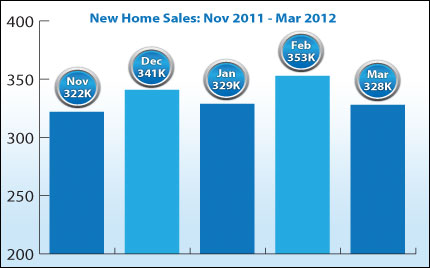
After last week’s regularly scheduled meeting of the Federal Open Market Committee (FOMC), Fed Chairman Ben Bernanke acknowledged that conditions in our economy are improving modestly, but he noted that the housing market remains depressed. One example of this is New Home Sales, which fell 7.1% in March to 328K units on an annual rate.


Bernanke also noted that inflation is higher in the short-run due to higher energy costs, but that the Fed expects prices to moderate and remain in check longer-term. Remember, inflation hurts the value of fixed investments like Bonds (including Mortgage Bonds, to which home loan rates are tied)...so inflation staying in check is crucial when it comes to home loan rates remaining near record best levels.


One important subject the Fed didn’t mention in their Policy Statement was another round of Bond buying to stimulate our economy (known as Quantitative Easing or QE3). This wasn’t much of a surprise because — after several moves to prop up the economy — the Fed must see where upcoming economic reports go before venturing to underwrite the economy further. If the housing market remains depressed and the economy doesn't pick up steam, QE3 could be a very real possibility.


And there was a bit of a sluggish read on our economy last Friday, after the Fed’s mid-week meeting. The advanced (first of three readings) of Gross Domestic Product (GDP) for the 1st Quarter of 2012 came in at 2.2%, well below expectations. This was also well below the 3% final 4th Quarter 2011 GDP reading. Within the report it showed that the personal consumption expenditure inflation reading rose at the fastest pace since the 2nd Quarter of 2011. This is definitely something the Fed is watching closely. 
As 2012 continues to unfold, inflation, the housing market, our sluggish economy, and our ever-growing debt are important issues that the Fed and our government need to address. Seeing the debt crisis in Europe escalate must put a sense of urgency on our government to reign in our annual budget deficit and overall debt. This mix of factors will continue to impact the direction in which Bonds and home loan rates move in the weeks ahead.


The good news is that now continues to be a great time to purchase or refinance a home, as home loan rates remain near historic lows. Let me know if I can answer any questions at all for you or your clients.


Forecast For The Week: A full slate of economic reports ahead, with news of inflation, manufacturing, and the job market.

As you can see in the chart below, Bonds and home loan rates continue to hover near record best levels. I’ll stay on top of this week’s news to monitor how Bonds and home loan rates are impacted.

Chart: Fannie Mae 3.5% Mortgage Bond (Friday Apr 27, 2012)


A slew of economic reports are set for release this week, and investors and traders will be watching the data closely for any signs of an economic slowdown:
  • Right off the bat on Monday the Personal Income and Spending data will be released along with the closely watched Core Personal Consumption Expenditure (PCE) report. The Core PCE is the Fed's favorite gauge of inflation and comes after Fed Chairman Ben Bernanke said last week that inflation in the short-term has been pressured higher by rising energy costs.      
  • In the manufacturing sector, the Chicago PMI will be released on Monday with the national ISM Index delivered on Tuesday. 
  • On Wednesday, the ADP Employment Report will be released ahead of the government's monthly Non-farm Payrolls and the Unemployment Rate on Friday.         
  • Initial Weekly Jobless Claims will be released on Thursday. The recent couple weeks of elevated Jobless Claims is disturbing…and if it continues, rest assured QE3 chatter will re-emerge.
Remember: Weak economic news normally causes money to flow out of Stocks and into Bonds, helping Bonds and home loan rates improve, while strong economic news normally has the opposite result. The chart above shows Mortgage Backed Securities (MBS), which are the type of Bond that home loan rates are based on. 


When you see these Bond prices moving higher, it means home loan rates are improving — and when they are moving lower, home loan rates are getting worse.


To go one step further — a red “candle” means that MBS worsened during the day, while a green “candle” means MBS improved during the day. Depending on how dramatic the changes were on any given day, this can cause rate changes throughout the day, as well as on the rate sheets we start with each morning.